How to Check Used Furniture for Bed Bugs in Kingsport
Buying used furniture in Kingsport? Learn where bed bugs hide, what signs to check, and what to do before bringing a couch, mattress, or dresser home.

A good piece of used furniture can be difficult to pass up. Maybe you found a couch on an online marketplace, a solid wood dresser at an estate sale, a bed frame at a yard sale, or a piece being offered by a friend or relative. Buying secondhand can make practical and financial sense, especially when the furniture is in good condition.
The concern is not that every used couch, mattress, dresser, or bed frame contains bed bugs. Most do not. The problem is that furniture contains seams, joints, folds, cracks, hardware, and other protected spaces where bed bugs or their eggs may be difficult to notice during a casual look.
For that reason, knowing how to check used furniture for bed bugs is an important part of buying secondhand furniture in Kingsport.
Whenever possible, inspect the item before it enters your vehicle or home. A careful inspection can help you recognize suspicious evidence early, although even a detailed visual check cannot guarantee that a piece of furniture is completely free of bed bugs.
Can Used Furniture Bring Bed Bugs Into Your Home?
Yes. Used furniture can introduce bed bugs into a home when insects or eggs are already concealed somewhere inside the item.
Upholstered furniture provides many protected areas that deserve attention, including cushion seams, piping, folds, the spaces between cushions, the underside of the piece, and connections within the frame. A couch or recliner may appear perfectly clean from several feet away while still having areas that are difficult to see without moving cushions and looking underneath.
Hard furniture should not automatically be treated as risk free either. Bed frames, headboards, dressers, nightstands, tables, and other pieces may contain joints, screw holes, drawer runners, cracks, hardware connections, and other narrow spaces.
Bed bugs do not consume wood. Wooden furniture becomes relevant because its construction can create protected areas where insects can remain concealed.
Used furniture is only one possible way bed bugs can enter a property. If you are trying to determine whether something you found is actually related to bed bugs, review these signs of bed bugs before assuming an ordinary stain, mark, or insect confirms an infestation.
Before You Buy: Ask a Few Questions About the Furniture
Your inspection can begin before you even see the furniture.
If you are responding to an online marketplace listing or arranging a private sale, asking the seller a few basic questions can provide useful context. Consider asking how long the person has owned the item, where it has been stored, whether it was recently moved from another property, and why it is being sold.
You can also ask directly whether anyone in the property has recently noticed bed bugs or had a bed bug concern.
For upholstered furniture, ask whether you will be able to remove the cushions and examine the underside before purchasing it. For a dresser or nightstand, confirm that you can remove or open the drawers and inspect the back and bottom of the piece.
Seller answers should never be treated as proof that furniture is free of bed bugs. Someone may simply be unaware of a problem. The answers can, however, give you more information about the item's history and help you decide how carefully it needs to be examined.
The same principle applies whether you are purchasing from an online marketplace, estate sale, yard sale, thrift setting, friend, relative, or another secondhand source. The source itself does not establish whether an item has bed bugs. The condition, history, construction, and evidence found during inspection matter more.
What Signs of Bed Bugs Should You Look for on Used Furniture?
Inspecting furniture effectively requires knowing what type of evidence deserves a closer look.
Live Bugs
Finding a live bed bug on a piece of furniture is an obvious reason to stop considering the item.
The more difficult problem is that insects may not be sitting on exposed surfaces. Protected seams, folds, joints, cracks, frame connections, and areas beneath furniture deserve greater attention than the middle of a clean cushion or tabletop.
Eggs and Eggshells
Eggs or eggshell material may be present in protected areas of furniture and can be difficult to identify during a hurried inspection.
Pay particular attention to narrow spaces where the furniture is rarely disturbed, including seams, frame connections, screw holes, drawer structures, and concealed sections underneath the piece.
Shed Skins
Bed bugs shed their outer skins as they develop. These cast skins may collect in areas where activity has occurred, including furniture seams, joints, cracks, and other protected spaces.
An unusual piece of material by itself should not be treated as automatic confirmation. Consider where it was found and whether other suspicious evidence appears nearby.
Dark Spotting
Dark marks or spotting around seams, upholstery edges, furniture joints, and protected surfaces can warrant additional investigation.
Old furniture naturally accumulates stains, dirt, marks, and discoloration over time, so one dark spot on a couch should not automatically be labeled as bed bug evidence.
Reddish or Rust Colored Staining
Reddish or rusty marks can also appear around furniture associated with bed bug activity, although staining alone is not enough to establish the cause.
Context matters. A combination of suspicious spotting, cast skins, eggs, or a live specimen creates considerably more reason for concern than one unexplained mark on an older piece of furniture.
How to Inspect Used Furniture for Bed Bugs Before Buying It
The most useful inspection is a deliberate one.
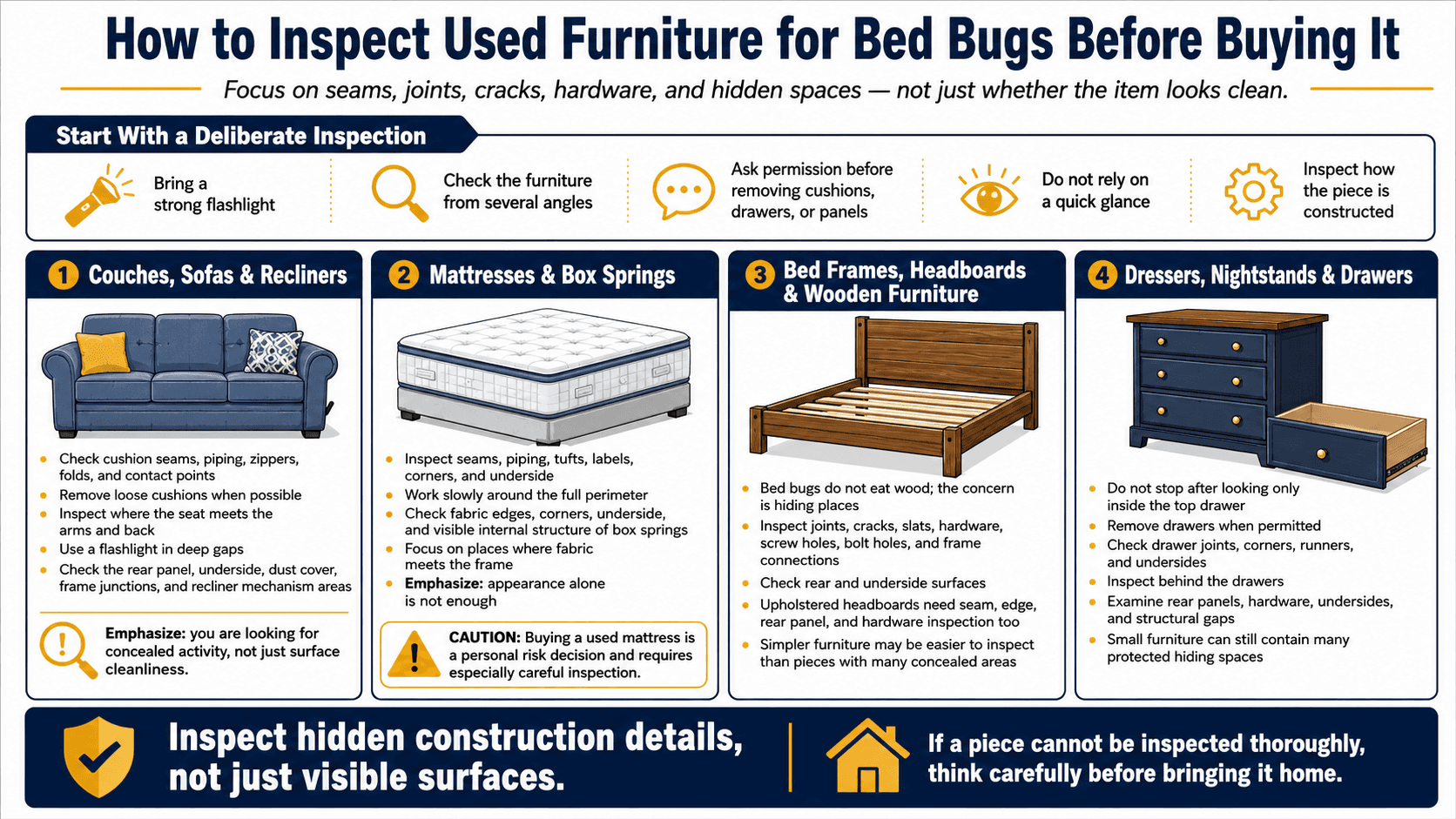
Bring a strong flashlight if possible and make sure you have enough room to examine the furniture from several angles. Ask permission before removing cushions, drawers, panels, or anything else that belongs to the seller.
Avoid treating the process as a quick glance before loading the item. Bed bugs can occupy concealed areas, which is why the inspection should focus on how each piece of furniture is actually constructed.
Couches, Sofas and Recliners
A used couch deserves particularly careful attention because upholstered seating contains numerous seams, folds, layers, and structural connections.
Start with the cushions. Examine the seams around each cushion, the piping along the edges, zipper areas, folds in the material, and the surfaces where one cushion contacts another. Remove loose cushions when possible rather than inspecting only what is visible from above.
Next, look into the spaces where the seat meets the arms and back of the couch. Shine your flashlight into gaps instead of relying on normal room lighting.
Move to the rear and underside of the furniture. Examine the back panel, bottom edges, fabric dust cover, frame junctions, and any accessible structural areas.
Recliners introduce additional construction around the reclining mechanism. Inspect accessible areas around the mechanism, frame, underside, cushions, seams, and upholstery without attempting to disassemble or damage the furniture.
The goal is not simply to decide whether the couch looks clean. You are looking specifically at the places where activity would be easier to conceal.
Mattresses and Box Springs
Used mattresses and box springs deserve a similarly careful inspection because their construction creates numerous seams, fabric edges, and protected areas. Check the mattress seams, piping, tufts, labels, corners, and underside. Slowly work around the perimeter instead of checking only the sleeping surface.
Box springs require attention to fabric edges, corners, the underside, and any internal structure that can be viewed without damaging the material. Look closely at places where fabric meets the frame. An item that looks clean from above has not necessarily been thoroughly inspected. Construction matters more than appearance alone.
Buying a used mattress is ultimately a personal risk decision. A professional approach is not to declare every secondhand mattress unsafe, but to recognize that mattresses and box springs require especially careful examination before they are brought into the home.
Bed Frames, Headboards and Wooden Furniture
Wooden furniture is sometimes misunderstood in discussions about bed bugs. Bed bugs are not consuming the wood itself. The concern is the collection of joints, cracks, hardware, and narrow connections created when the furniture is assembled. On a used bed frame, inspect the joints where sections meet, screw and bolt holes, slats, frame connections, cracks, hardware, and rear or underside surfaces.
Headboards can have additional decorative grooves and connection points. Upholstered headboards need the same attention given to other fabric covered furniture, particularly around seams, edges, rear panels, and hardware. A complicated wooden frame with numerous joints may simply be harder to inspect thoroughly than a smooth piece with very few concealed areas.
Dressers, Nightstands and Drawers
Do not stop after opening the top drawer and looking inside. Pull drawers out when the furniture design and seller permit it. Examine drawer joints, corners, runners, the underside of the drawers, and the spaces created where one part of the structure connects to another. Check behind the drawers as well. The rear panel, hardware, underside, and gaps around structural connections can easily be missed when a dresser is inspected only from the front. Nightstands deserve the same treatment. Small furniture can still contain drawer runners, joints, corners, hardware, cracks, and other protected spaces.
Furniture Type | Areas to Inspect Closely | Relative Caution |
|---|---|---|
Couch or sofa | Seams, piping, cushions, underside, frame | High |
Recliner | Seams, mechanism, cushions, underside | High |
Mattress | Seams, piping, labels, tufts, underside | High |
Box spring | Fabric edges, underside, internal structure | High |
Upholstered headboard | Seams, rear panel, hardware | High |
Bed frame | Joints, slats, screw holes, connections | Moderate to high |
Dresser | Drawers, runners, back, underside, joints | Moderate |
Nightstand | Drawers, corners, hardware, joints | Moderate |
Smooth, simple furniture | Joints, cracks, underside | Generally easier to inspect |
These categories describe how much attention different pieces may require. They should not be interpreted as a guarantee that one type of furniture is safe.
A simple piece with fewer concealed spaces may be easier to examine thoroughly than a complicated upholstered item. Even so, an item cannot be guaranteed free of bed bugs simply because nothing suspicious was visible during the inspection.
When Should You Walk Away From Used Furniture?
Sometimes the best decision is not to bring the item home.
Finding a live bed bug is a strong reason to walk away. Convincing eggs, cast skins, or several suspicious signs concentrated in protected areas should also make you reconsider the purchase.
Furniture can also be problematic when its construction prevents a meaningful inspection. A large upholstered piece with extensive inaccessible areas may leave you with more uncertainty than a simple piece that can be examined from every side.
Consider walking away if the seller refuses to let you inspect reasonable areas such as the underside, removable cushions, or drawers. Refusal does not prove that the furniture contains bed bugs, although purchasing an item you cannot properly examine increases uncertainty.
Use the same judgment with stains and ordinary wear. Old furniture can have countless marks that have nothing to do with bed bugs. One unexplained spot is very different from finding multiple forms of convincing evidence in the same protected areas.
Be Especially Careful With Curbside and Unknown Furniture
Furniture left at the curb creates a different problem: you often know almost nothing about its history.
The reason it was discarded may be unknown. You probably do not know where it was previously used, whether the property had a pest concern, whether the item has been treated for anything, or how long it has been sitting outside.
A seller can at least answer questions. Curbside furniture cannot provide that context.
None of this means every discarded couch, chair, table, or dresser contains bed bugs. The issue is uncertainty. When the history is unknown and the construction makes detailed inspection difficult, you have less information on which to base your decision.
A free piece of furniture can become far less appealing when you cannot determine why it was discarded or inspect the areas that concern you.
Inspect Before You Put the Furniture in Your Vehicle
Do not wait until you reach home to perform your first serious inspection.
Whenever circumstances allow, examine the furniture before it enters your car, van, or truck. Discovering convincing evidence before loading the item gives you the simplest possible decision: leave it where it is.
Once questionable furniture has been loaded into a vehicle and transported home, the situation becomes more complicated.
If you find a live bed bug or other convincing evidence while inspecting the piece, do not load the furniture.
If you find nothing suspicious, remember what the inspection can and cannot tell you. A careful visual examination reduces uncertainty and may help identify obvious evidence, but it cannot provide absolute certainty that nothing is concealed inside an inaccessible area.
What If You Already Brought the Furniture Into Your Kingsport Home?
Sometimes concern begins only after the furniture is already inside.
You may notice a suspicious insect while cleaning the couch, discover dark spotting under a cushion, find shed material near a furniture joint, or notice something unusual around the area where the new piece was placed.
The response should be controlled rather than rushed.
Avoid Moving the Furniture Through More Rooms
Moving a suspicious couch from one room to another can unnecessarily complicate the situation. Avoid carrying the item through additional areas simply because you are worried about what you found.
Moving it into a garage, another bedroom, or somewhere else on the property should not automatically be your first response.
Preserve Useful Evidence
If you find an insect, take a clear photograph when possible. A specimen may also be useful for identification if it can be safely preserved without crushing or losing it.
Good evidence can make professional identification easier than trying to describe what you remember seeing.
Look at the Immediate Area
Inspect the area around the furniture and nearby places where people regularly rest.
The purpose is not to perform your own full property investigation. You are trying to determine whether the suspicious evidence appears isolated to one location or whether additional signs are becoming visible nearby.
Avoid Random Pesticide Applications
Do not start applying unidentified sprays or combining products because you are unsure what you found.
Professional bed bug treatment is based on inspection, the location and extent of activity, property conditions, and an appropriate treatment strategy. Random pesticide use is not a substitute for identification.
Get the Evidence Properly Identified
If you find convincing evidence or cannot determine what you are looking at, a professional bed bug inspection can help establish whether bed bug activity is present and how far it may extend.
Bed Bugs Undercover technicians inspect concealed areas including furniture joints and other locations where activity may be difficult to see during an ordinary household inspection. Treatment recommendations can then be based on what is actually found rather than assumptions about the newly purchased furniture.
Does Furniture Have to Be Thrown Away If Bed Bugs Are Found?
Not automatically. Finding bed bugs associated with furniture does not mean every couch, bed frame, dresser, or other piece must immediately be discarded.
The appropriate decision depends on several factors, including how the furniture is constructed, where activity is located, the extent of the infestation, conditions elsewhere in the property, and the treatment strategy being considered.
Some furniture may be able to remain in place as part of a professional treatment plan. Other situations may require a different recommendation after inspection.
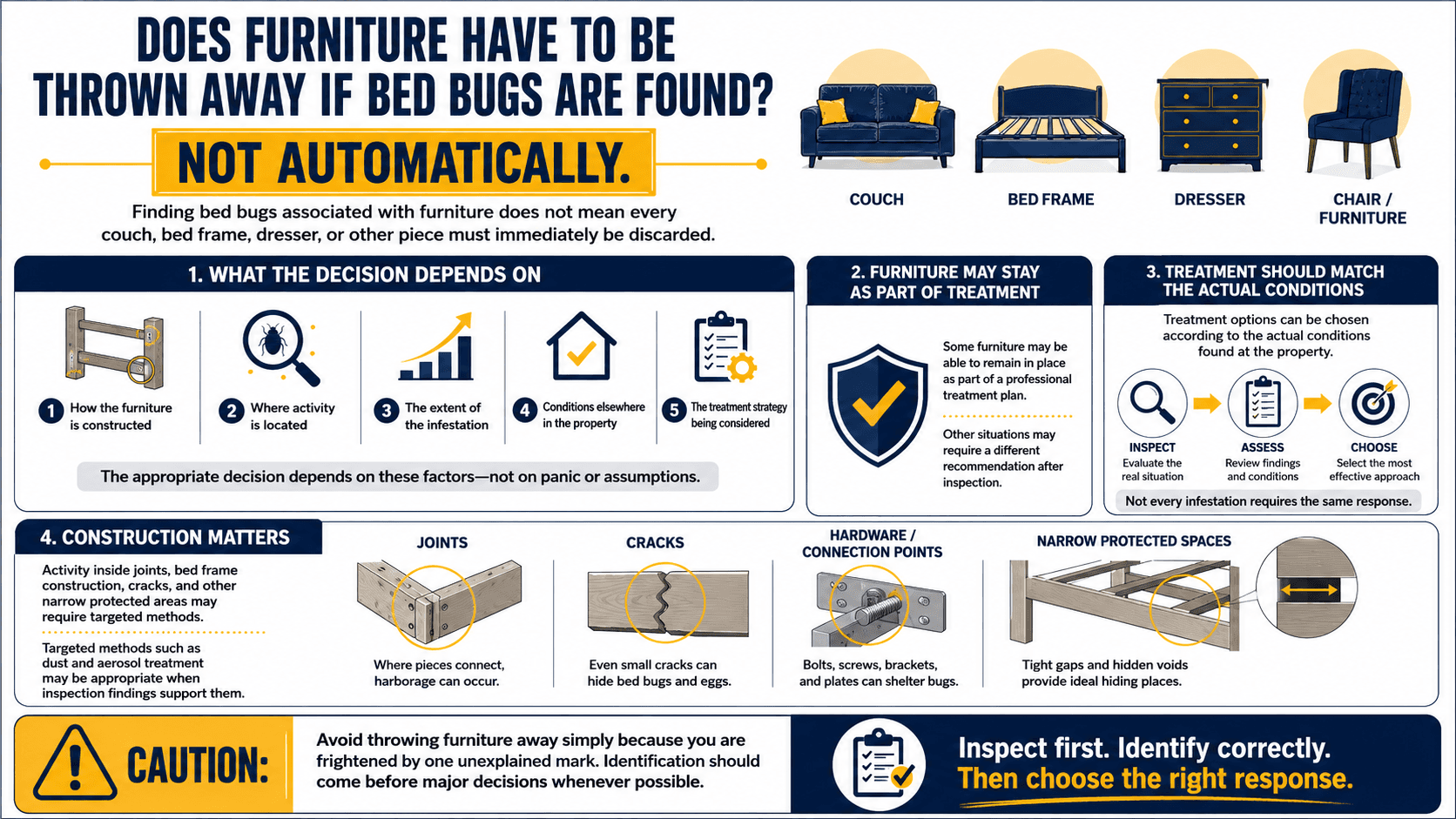
Bed Bugs Undercover offers multiple bed bug treatment options, allowing the treatment approach to be chosen according to the actual conditions found at the property rather than applying one universal response to every infestation.
Furniture construction can also influence treatment decisions. Activity inside joints, bed frame construction, cracks, and other narrow protected areas may require targeted methods such as dust and aerosol bed bug treatment when those methods are appropriate to the inspection findings.
Avoid throwing furniture away simply because you are frightened by one unexplained mark. Identification should come before major decisions whenever possible.
When Should You Schedule a Professional Inspection?
Not every secondhand furniture purchase requires a professional bed bug inspection.
If you are only considering an item, perform a careful furniture inspection before purchasing it. Finding nothing suspicious does not provide a guarantee, although simply browsing or purchasing secondhand furniture does not automatically mean your home needs to be inspected.
The situation changes when suspicious physical evidence appears after the item has entered the property.
A professional inspection becomes more relevant when you discover an insect you cannot confidently identify, possible eggs or cast skins, repeated spotting in protected areas, or several signs occurring together.
Finding a live bed bug or multiple convincing forms of evidence should increase the priority of professional confirmation.
Inspection can also be valuable when new furniture has already been placed in a bedroom, living room, or another regularly occupied area and unexplained evidence begins appearing nearby. A technician can evaluate more than the furniture itself and determine whether activity is present elsewhere in the property.
Used Furniture and Bed Bugs in Kingsport: The Practical Approach
People throughout Kingsport buy secondhand furniture for perfectly ordinary reasons. A used couch may fit the budget better than a new one. An estate sale may have a well built dresser that is difficult to find elsewhere. Friends and relatives pass furniture between households, and online marketplaces make local buying easier than ever.
Used furniture does not need to be treated as something inherently dangerous.
The practical approach is to recognize what you can control. Ask questions about the item's history when someone is available to answer them. Inspect seams, joints, drawers, upholstery, undersides, and structural connections carefully. Perform that inspection before the furniture enters your vehicle whenever possible.
Walk away when convincing evidence is present or when an item cannot reasonably be examined.
If the furniture is already inside your Kingsport home and you find suspicious activity, focus on identification instead of panic. Bed Bugs Undercover provides bed bug treatment in Kingsport, TN when an inspection confirms that treatment is needed.
The goal is not to make secondhand shopping frightening. It is to make the decision more informed.
Frequently Asked Questions About Bed Bugs in Used Furniture
Q.1 Can bed bugs live in wooden furniture?
Yes, bed bugs can be associated with wooden furniture. They do not eat the wood. The concern is that joints, screw holes, cracks, hardware connections, drawer structures, and other protected spaces can provide areas where activity remains concealed.
Q.2 How can you tell if a used couch has bed bugs?
Inspect cushion seams, piping, zippers, folds, spaces between the cushions, areas where the arms meet the seat, the back, underside, dust cover, and accessible frame connections. Look for live insects, eggs or eggshell material, shed skins, suspicious dark spotting, and other evidence rather than judging the couch only by its overall cleanliness.
Q.3 Where do bed bugs hide in couches?
Potential hiding areas include seams, upholstery folds, cushion edges, piping, spaces beneath cushions, frame junctions, the underside of the couch, and other concealed structural areas. Recliners may have additional protected spaces around accessible portions of the reclining mechanism.
Q.4 Can bed bugs live in dresser drawers?
Bed bugs can occupy protected areas associated with a dresser, including drawer joints, runners, corners, gaps, hardware, the rear panel, and spaces beneath or behind drawers. Inspecting only the exposed interior of a drawer may miss many of these locations.
Q.5 Is furniture safe if you do not see any bed bugs?
A clean visual inspection is reassuring, but it is not an absolute guarantee. Bed bugs and eggs can be difficult to see when they are located inside narrow or inaccessible areas. A careful examination reduces risk by helping you identify visible evidence before the furniture enters your home.
Q.6 Can furniture with bed bugs be treated?
In some situations, yes. Furniture does not automatically have to be discarded when bed bugs are found. Whether it can remain as part of the treatment plan depends on its construction, where activity is located, infestation severity, property conditions, and the treatment method recommended after inspection.
Concerned About Used Furniture Already Inside Your Kingsport Home?
If you purchased secondhand furniture and later found a suspicious insect, spotting, shed skins, eggs, or other evidence, you do not have to determine the extent of the problem on your own.
Bed Bugs Undercover can inspect the furniture and surrounding areas, identify whether bed bug activity is present, and determine what should happen next. An inspection gives you a clearer basis for deciding whether treatment is necessary instead of making that decision from a stain, photograph, or unexplained insect alone.